2026-11-05 ·
How to Spot a Hidden Plumbing Leak Before It Damages Your Home
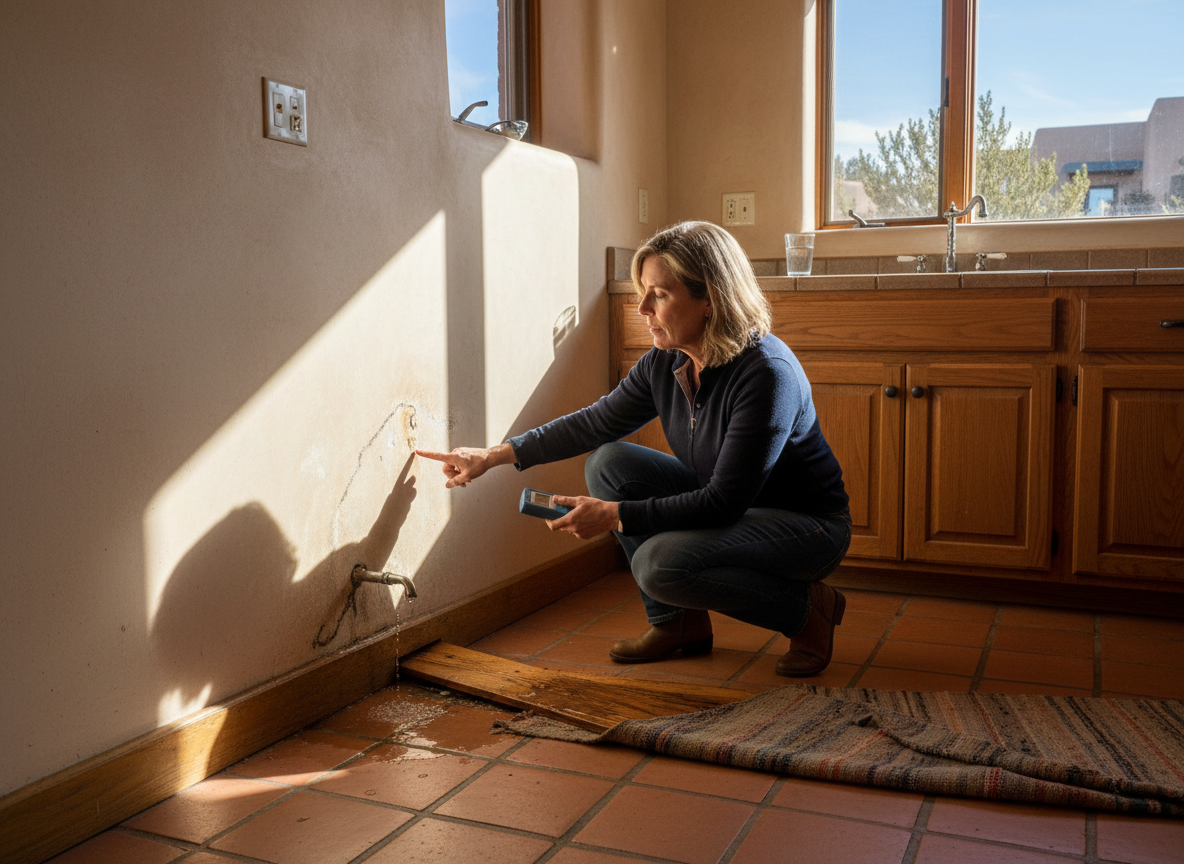
In Santa Fe County homes, a hidden leak often shows itself first through a 5-10 gallon daily water meter increase when all fixtures are off. Owners in Downtown or the Railyard District catch these by tracking the meter at night and noting any movement after two hours. High desert winters with freezing nights stress older galvanized lines in Eastside adobes and 1950s Canyon Road builds, turning small drips into wall or slab issues fast.
Test the Water Meter Overnight
Shut off every tap and appliance, then read the meter before bed. In the morning, any movement signals a leak somewhere in the supply line or under the slab common to Santa Fe County properties. Homes near the Georgia O'Keeffe Museum or Palace of the Governors often sit on older clay or cast-iron piping that corrodes after decades of alkaline water exposure. A steady 1/8-inch dial movement equals roughly 2-3 gallons lost per hour. Repeat the test monthly during winter when soil shifts from freeze-thaw cycles increase joint stress. If the meter spins, note the exact gallons and contact a plumber for targeted tracing rather than guessing at fixtures.
Look for Moisture Patterns on Surfaces
Check baseboards and drywall in bathrooms and kitchens for yellow-brown rings or soft spots, especially where pipes run behind walls in older Eastside construction. Santa Fe's cool summers keep indoor humidity low, so any persistent dampness usually traces to a supply or drain line rather than condensation. Under sinks, feel for cool spots on cabinet floors that indicate slow drips from supply valves. In Railyard District lofts with exposed plumbing, inspect joints for white mineral buildup from hard water common across the county. These signs appear weeks before visible ceiling stains form, giving time to address the issue before subfloor damage reaches the $800-2,000 range typical for slab repairs here.
Monitor Water Pressure and Bills
A sudden drop in shower pressure or a 15-20% spike in the monthly bill without added usage points to an underground or in-wall leak. Properties in Tesuque or near the Santa Fe Opera face rocky terrain that shifts pipes during spring thaws, creating pinholes that waste 10-15 gallons daily. Compare this month's usage against the same period last year; unexplained increases above 500 gallons warrant a meter isolation test. Hard water scaling accelerates valve wear in these conditions, so cross-reference with the common issues covered in our guide on hard water problems in Santa Fe.
Inspect Outdoor and Foundation Areas
Walk the perimeter after heavy rain or snowmelt and note any soggy patches or new erosion near the foundation, a frequent problem on sloped lots in Agua Fria and La Cienega. In winter, look for ice formations along exterior walls where warm air from a leak meets freezing temperatures. These outdoor clues often connect to supply lines feeding older homes near the Santa Fe Plaza. Persistent wet soil can undermine footings within one season, so document the location and size of any damp zone before it expands.
When to Bring in Professional Tools
If meter and visual checks remain inconclusive, schedule leak detection that uses acoustic or camera equipment suited to Santa Fe's adobe and stucco walls. Early intervention through pipe repair prevents the need for larger emergency plumbing calls after a freeze. Owners in nearby Albuquerque often face the same high-desert pipe stresses and benefit from the same proactive checks.